Tutorial for secure emailing with personal domain,Cloudflare, virtualmin and postfix
-
sorry for the late response my friends. They unblocked port 25 very quickly and I can send emails;
Just that the domains in caramail.com refused my sending of email for obscure reasons and protonmail, I receive them but in spam with an error message
I will share all its errors with you to see and I would like to deepen that the DMARC, and DKIM puts the private/public key which I do not really understand (see my request above)
PW and WS Spirit alive
-
sorry for the late response my friends. They unblocked port 25 very quickly and I can send emails;
Just that the domains in caramail.com refused my sending of email for obscure reasons and protonmail, I receive them but in spam with an error message
I will share all its errors with you to see and I would like to deepen that the DMARC, and DKIM puts the private/public key which I do not really understand (see my request above)
@DownPW emails are going to junk because of missing DNS records as I mentioned previously. You won’t need to use the public and private keys unless you need extended and/or advanced functions.
-
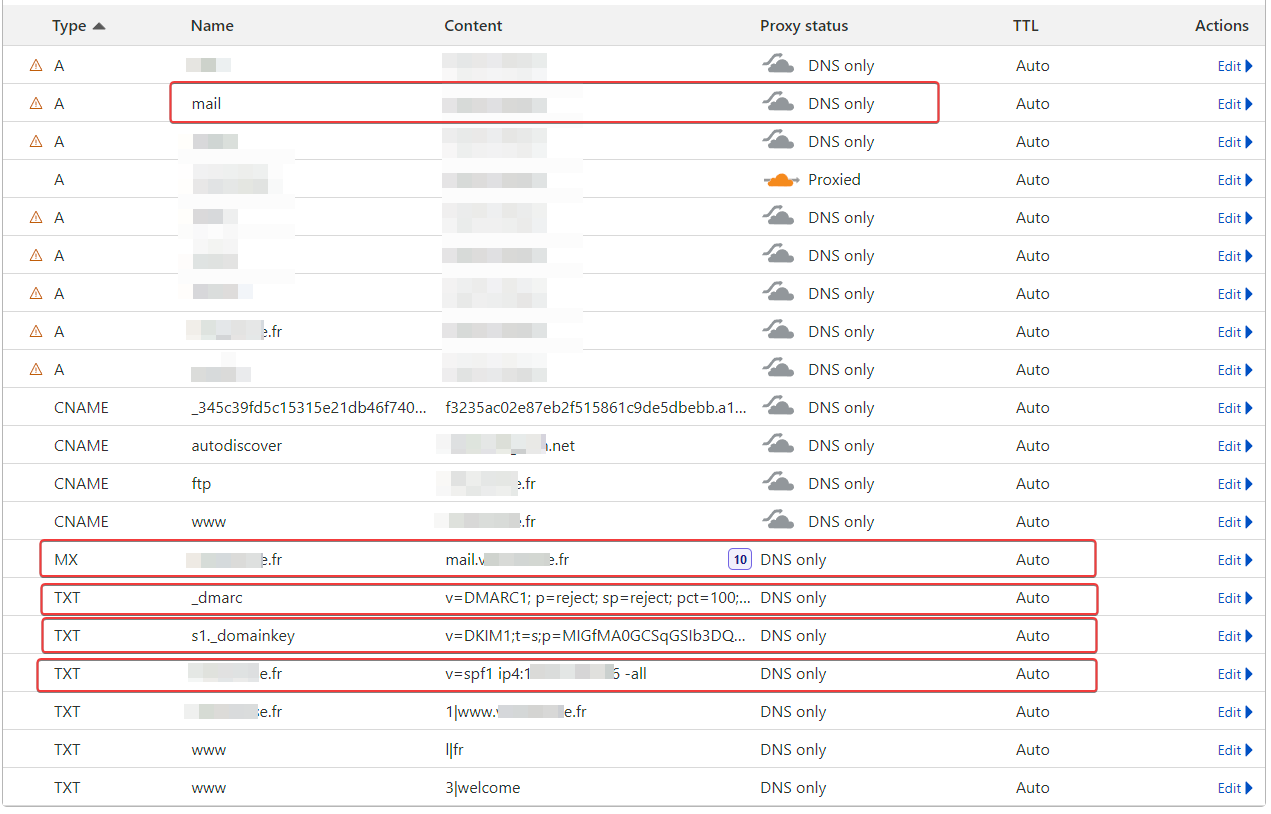
I have the DNS pointers present
PW and WS Spirit alive
-
@DownPW not all are there. The
SPFrecord is missing. That’s enough to place email you sent into junk at the recipient end. -
Spf is on the screenshot
PW and WS Spirit alive
-
@DownPW sorry, yes, it is. Completely missed that.
-
@DownPW Can you PM me your domain name so I can run a few tests?
-
Yep no problem
PW and WS Spirit alive
-
@DownPW thanks. See PM. You can validate your domain in terms of its email suitability by using the checker below
https://emailhealthcheckup.com/
In addition, there are some great generators and checkers here
-
@DownPW any update?


Hello! It looks like you're interested in this conversation, but you don't have an account yet.
Getting fed up of having to scroll through the same posts each visit? When you register for an account, you'll always come back to exactly where you were before, and choose to be notified of new replies (either via email, or push notification). You'll also be able to save bookmarks and upvote posts to show your appreciation to other community members.
With your input, this post could be even better 💗
Register Login